
In the rapidly evolving landscape of educational technology, Generative Artificial Intelligence (GenAI) stands as perhaps the most transformative force reshaping how we teach and learn. From personalized learning paths to intelligent tutoring systems, GenAI tools are revolutionizing education by offering unprecedented opportunities for customization, efficiency, and engagement. However, with these powerful capabilities come important considerations around ethics, implementation, and the changing role of educators.
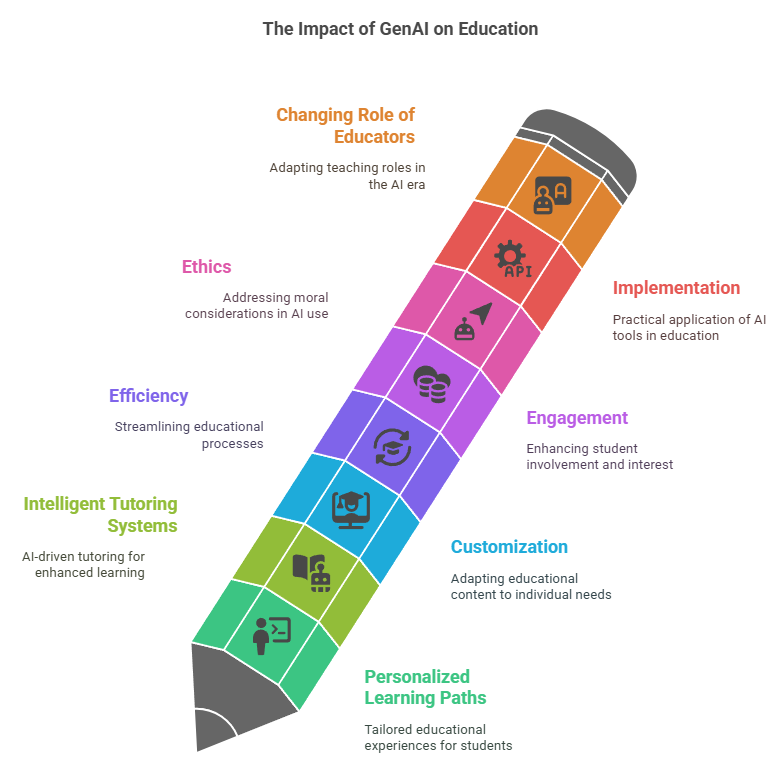
This comprehensive exploration dives into the current applications, benefits, challenges, and future trends of generative AI in education, providing practical insights for educators, administrators, and policymakers navigating this technological revolution.
Understanding Generative AI in Education
Generative AI refers to artificial intelligence systems capable of creating new content — including text, images, audio, and more — based on patterns learned from existing data. Unlike traditional AI that simply follows pre-programmed rules, generative AI can produce original outputs that often appear indistinguishable from human-created content. In educational contexts, these technologies can generate customized learning materials, interactive simulations, personalized feedback, and much more. Powered by advanced machine learning models like those behind ChatGPT, Gemini, and similar tools, generative AI is becoming increasingly accessible to educators at all levels.
Current Applications in Educational Settings
Personalized Learning Experiences
One of the most promising applications of generative AI is creating truly personalized learning experiences. As MDPI Sustainability research highlights, AI can analyze student progress using natural language processing and machine learning to generate customized study materials that adapt to individual learning styles, paces, and preferences. For example, Khan Academy’s Khanmigo tool adjusts lesson content in real-time based on a student’s performance, ensuring that learning materials match their current capabilities while gradually introducing more challenging concepts Ziffity.
Intelligent Tutoring and Support
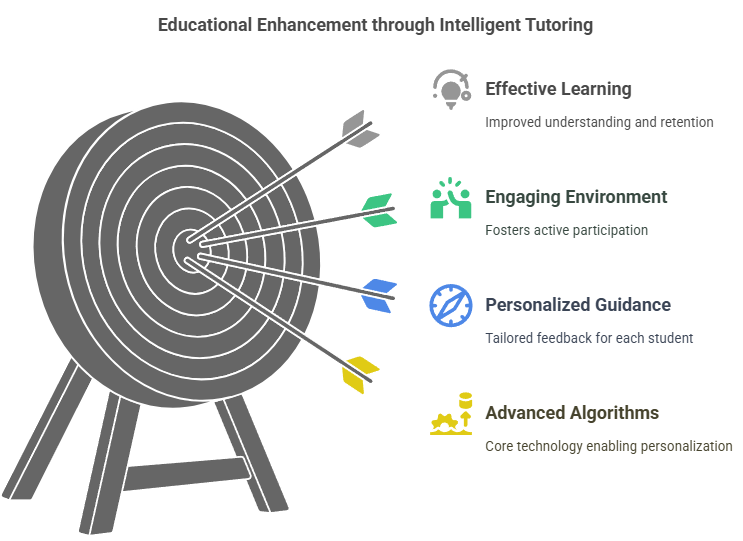
AI-powered tutors and chatbots provide round-the-clock learning support, offering step-by-step guidance through difficult concepts. These virtual assistants can:
- Answer questions instantly
- Provide explanations tailored to individual learning styles
- Offer hints rather than complete solutions
- Track progress and identify areas needing additional support
Research from International Journal of Educational Technology in Higher Education shows that students particularly value these tools for providing immediate help when human instructors aren’t available.
Content Creation and Enhancement
For educators, generating high-quality learning materials can be time-consuming. Generative AI tools are easing this burden by:
- Creating lesson plans and curriculum outlines
- Generating practice questions and assessments
- Producing differentiated materials for diverse learning needs
- Translating content into multiple languages
According to Education Horizons, tools like Curipod enable teachers to create interactive lessons in minutes by generating text, images, polls, and other engaging elements based on simple prompts.
Automated Assessment and Feedback
AI systems are also transforming assessment by:
- Providing immediate, detailed feedback on assignments
- Generating quizzes that adapt to student performance
- Helping teachers identify patterns in student work
- Suggesting targeted interventions for struggling students
A study from MDPI found that 82.4% of students believe AI-supported assessment enhances their academic performance through timely, personalized feedback.
Administrative Efficiency
Beyond direct teaching applications, generative AI is streamlining administrative tasks, allowing educators to focus more on meaningful interactions with students. Schools are using AI to:
- Draft communications to parents
- Generate report card comments
- Organize and analyze student data
- Manage scheduling and resource allocation
Real-World Implementation Success Stories
Educational institutions worldwide are already seeing positive results from generative AI implementation:
Case Study: Georgia Institute of Technology’s “Jill Watson”
Georgia Tech deployed an AI teaching assistant named “Jill Watson” to respond to student questions in online courses. Students were so impressed with the quality of responses that many didn’t realize they were interacting with an AI until being informed later in the semester. This implementation demonstrated how AI could effectively handle routine inquiries, freeing human instructors to address more complex issues Digital Defynd.
Case Study: Carnegie Learning’s MATHia
Carnegie Learning’s MATHia platform uses AI to adjust math instruction in real-time based on student performance. The system identifies when students are struggling with specific concepts and adapts instruction accordingly. Schools implementing MATHia have reported significant improvements in math proficiency scores TechTimes.
Case Study: Harris Federation (UK)
The Harris Federation in the UK has successfully integrated AI tools like ChatGPT and Microsoft Live to adapt curriculum content and provide real-time translations, particularly benefiting English language learners. This has resulted in improved comprehension and engagement among students from diverse linguistic backgrounds Digital Defynd.
Benefits of Generative AI in Education
Research consistently highlights several key benefits of generative AI in educational settings:
Enhanced Learning Outcomes
Studies indicate that personalized learning experiences facilitated by generative AI can lead to improved comprehension and retention. According to Fullestop, AI-driven personalization helps students grasp concepts more thoroughly by adapting content to their unique learning styles and paces.
Time Efficiency for Educators
Generative AI dramatically reduces the time teachers spend on administrative tasks. The MDPI research found that “timesaving” was the most frequently cited benefit (42 responses) among educators using AI tools, allowing them to reallocate that time to more impactful teaching activities.
Increased Accessibility and Inclusion
AI can make education more accessible to students with different abilities and learning challenges. Text-to-speech, speech-to-text, and automatic captioning features help learners with disabilities, while translation capabilities support language learners Fullestop.
Enhanced Student Engagement
The interactive nature of AI-powered learning experiences tends to boost student engagement. When learning materials adapt to individual interests and needs, students show higher motivation and participation Education Horizons.
Continuous Assessment and Improvement
Rather than relying solely on periodic tests, AI enables continuous assessment through ongoing analysis of student interactions. This provides richer insights into learning progress and allows for more timely interventions MDPI Sustainability.
Challenges and Considerations
Despite the promising benefits, implementing generative AI in education comes with significant challenges:
Academic Integrity Concerns
As reported by Education Horizons, there are legitimate concerns about students using AI to complete assignments without meaningful learning. Educators must develop strategies to distinguish between appropriate assistance and inappropriate reliance on AI-generated content.
Data Privacy and Security
AI systems collect vast amounts of sensitive student data, raising serious privacy considerations. According to Ziffity, educational institutions must implement robust cybersecurity measures and strictly adhere to data protection regulations when deploying AI tools.
Accuracy and Reliability Issues
Research by MDPI found that 48.2% of students worry about receiving incorrect or misleading information from AI systems. This “hallucination” problem — where AI confidently presents false information — remains a significant challenge in educational applications.
Equity and Access Disparities
There’s a real risk that AI integration could widen existing educational divides. As Ziffity notes, well-resourced schools can more easily implement advanced AI tools, potentially leaving under-resourced communities further behind without intentional intervention.
Critical Thinking and Creativity Concerns
Some educators worry that over-reliance on AI might hinder the development of essential critical thinking skills. According to the International Journal of Educational Technology in Higher Education, students themselves recognize this risk, expressing concern that AI dependency might impair their analytical abilities.
Student Perspectives on Generative AI
Understanding how students view and use generative AI is crucial for effective implementation. Research from Harvard Graduate School of Education reveals several important insights:
Diverse Usage Patterns
Students use generative AI for various purposes beyond just completing assignments. The most common applications include:
- Getting information (53%)
- Brainstorming ideas (51%)
- Creating visual and multimedia content (31%)
- Asking sensitive questions they might hesitate to ask adults
- Creative expression and exploration
Request for Balanced Understanding
Students want educators to recognize that AI is not solely used for cheating. As one student in the Harvard study noted, “not all kids use it to cheat in school.” They desire a more nuanced understanding that acknowledges the legitimate learning benefits AI can provide.
Desire for Clear Guidelines
Rather than outright bans, students express a preference for clear guidelines on appropriate AI use. According to International Journal of Educational Technology in Higher Education, they value transparency from institutions about expectations and boundaries.
Recognition of Risks
Students demonstrate awareness of AI’s limitations, with concerns about accuracy, privacy, and the potential for overreliance. This suggests they approach these tools with more sophistication than educators might assume.
Implementation Strategies for Educators
Successful integration of generative AI into educational settings requires thoughtful planning and execution:
1. Start with Clear Objectives
Before implementing any AI tool, educators should identify specific learning objectives and student needs that technology can address. As Kangaroos.ai advises, “Identify learning objectives and specific student needs that AI can address” rather than implementing technology for its own sake.
2. Develop Comprehensive AI Policies
Schools need clear policies governing AI use that address:
- Academic integrity expectations
- Data privacy protections
- Ethical considerations
- Appropriate contexts for AI use
According to Education Horizons, effective policies specify which tasks can be AI-assisted and which must be completed independently.
3. Provide Professional Development
Educators need training to effectively integrate AI tools into their practice. Edutopia emphasizes that professional development should focus not just on technical skills but on pedagogical approaches that maximize AI’s benefits while mitigating risks.
4. Start Small and Scale
Kangaroos.ai recommends beginning with pilot projects to evaluate effectiveness before wider implementation: “Pilot these tools with a small group of students to gather feedback and assess effectiveness.”
5. Maintain Human Oversight
While automating certain tasks, maintain human judgment in critical areas. Research from MDPI Sustainability highlights the importance of human review in validating AI-generated content before implementation.
6. Foster AI Literacy
Teaching students about AI — how it works, its capabilities, and its limitations — is essential for responsible use. Harvard Graduate School of Education recommends explicit discussions about ethical AI use and providing guidance on evaluating AI-generated content.
7. Monitor and Adapt
Continuously collect data on the impact of AI implementation and be prepared to adjust approaches based on outcomes. Ziffity notes the importance of “monitoring the implementation through data analysis and reflective practices.”
Recommended Tools for Educators
Several AI tools have proven particularly valuable in educational settings:
Content Creation Tools
- Curipod: Generates interactive lessons with texts, images, polls, and SEL activities Edutopia
- Canva Magic Write: Assists with brainstorming and creative writing for lesson materials
- Slidesgo: Creates presentation templates and slides quickly
Personalized Learning Platforms
- DreamBox: Adapts math instruction to individual student needs Kangaroos.ai
- Carnegie Learning’s MATHia: Adjusts instruction based on student progress TechTimes
- Duolingo: Personalizes language learning experiences
Assessment and Feedback Tools
- Quizizz: Designs quizzes with AI-enhanced features that adjust difficulty Edutopia
- Quillionz: Generates quiz questions from educational content
- Eduaide.AI: Offers translation and various teaching aids
Administrative Support
- AudioPen: Converts speech to text for efficient documentation
- Grammarly: Enhances writing through AI-driven assistance
- Khanmigo: Provides AI-powered tutoring based on Khan Academy content
The Future of Generative AI in Education
As generative AI continues to evolve, several trends are likely to shape its educational applications:
Deeper Personalization
Future AI systems will offer even more sophisticated personalization, potentially creating unique learning pathways for every student based on comprehensive analysis of their learning patterns, interests, and goals Ziffity.
Immersive Learning Environments
The integration of AI with virtual and augmented reality will create increasingly immersive educational experiences. As TechTimes notes, these technologies will enable students to experience historical periods firsthand or explore complex scientific concepts in three-dimensional space.
Enhanced Human-AI Collaboration
Rather than replacing teachers, future AI systems will likely work more seamlessly alongside them, with clearer delineation of roles that maximize the strengths of both human and artificial intelligence Ziffity.
More Sophisticated Assessment
AI will enable more nuanced assessment of complex skills like critical thinking and collaboration that have traditionally been difficult to measure at scale MDPI Sustainability.
Greater Accessibility
Continued advances will make high-quality education more accessible to underserved populations, including those with disabilities, language barriers, or geographic limitations Fullestop.
Conclusion: Navigating the AI Revolution in Education
Generative AI represents both an extraordinary opportunity and a significant challenge for education. Its potential to personalize learning, assist educators, and enhance accessibility is balanced against concerns about integrity, privacy, equity, and the fundamental nature of learning itself.
The most successful implementations will likely be those that thoughtfully integrate AI into existing educational frameworks rather than attempting wholesale replacement of traditional approaches. By maintaining a focus on pedagogical goals rather than technological capabilities, educators can harness AI’s power while preserving the essential human elements of teaching and learning.
As we navigate this rapidly evolving landscape, ongoing dialogue between technologists, educators, students, and policymakers will be essential. By collaboratively developing ethical frameworks, implementation strategies, and evaluation methods, we can work toward an educational future where generative AI serves as a powerful tool for enhancing human potential rather than diminishing it.
The generative AI revolution in education is just beginning. How we respond to it will shape learning experiences for generations to come.