Learning Analytics
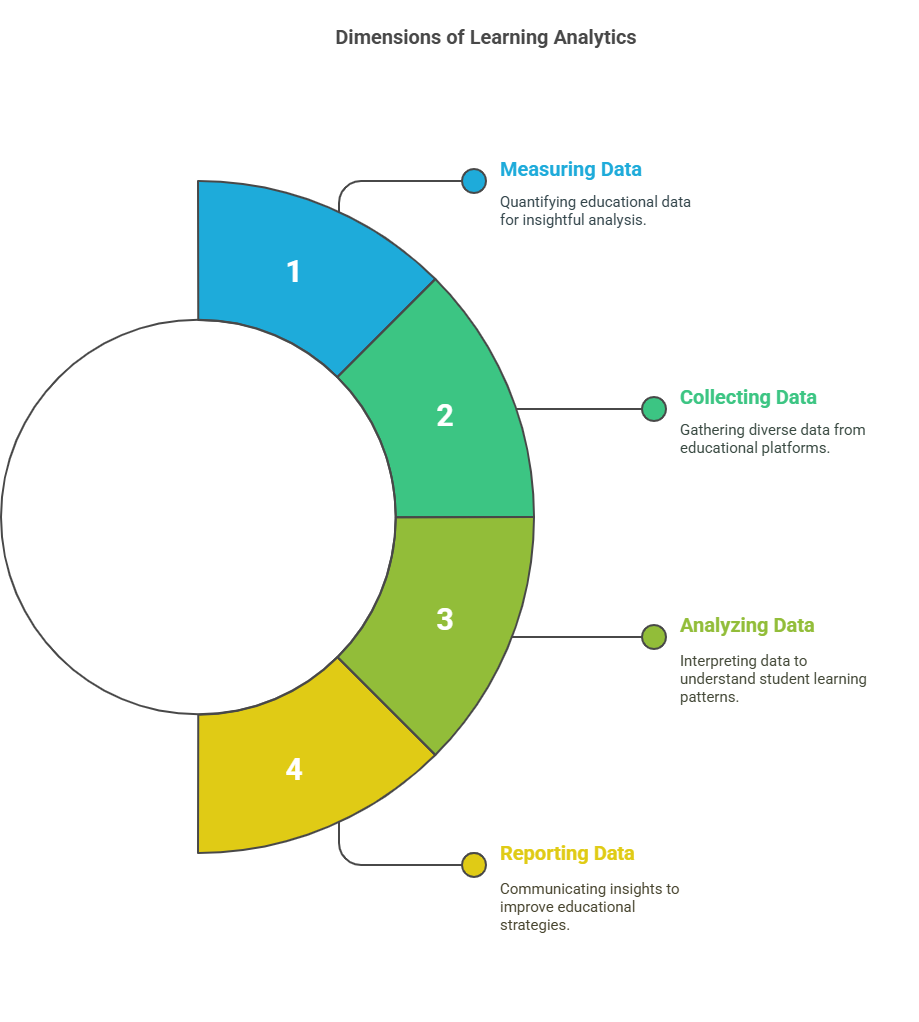
Learning analytics is the process of measuring, collecting, analyzing, and reporting data about learning activities and outcomes to understand how students learn, identify areas for improvement, and optimize educational programs. It involves the use of various data sources, such as learning management systems, student information systems, and assessment data, to gain insights into student behavior, engagement, and performance.
Key Components of Learning Analytics
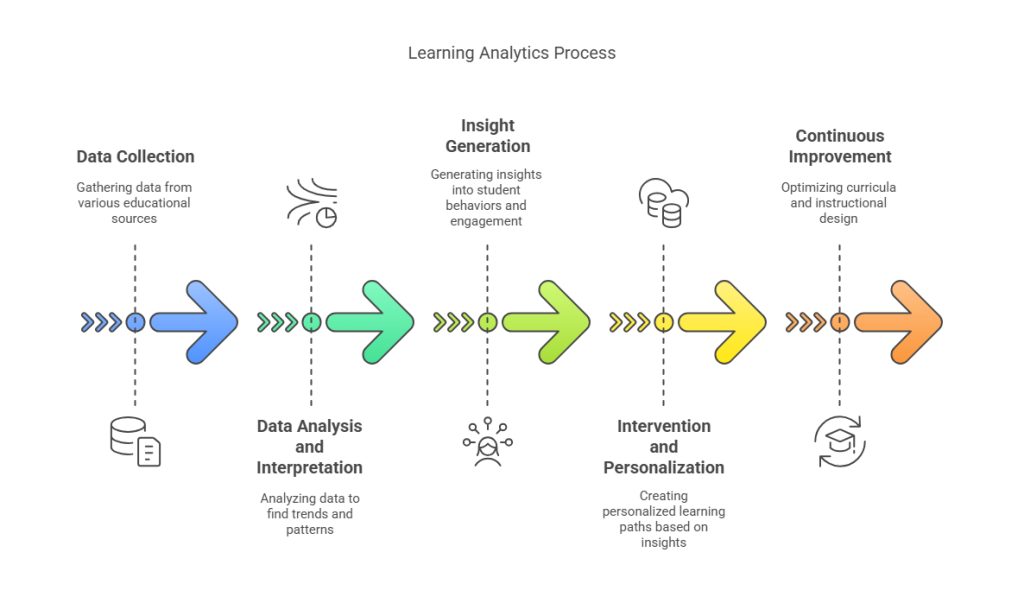
- Data Collection: Learning Analytics uses data from various sources such as Learning Management Systems (LMS), online assessments, interaction logs, and other digital tools used in education. It includes information on students’ performance, participation, and behaviors.
- Data Analysis and Interpretation: The collected data is analyzed to find trends, patterns, and insights. This analysis can involve descriptive statistics, predictive models, or even machine learning techniques to forecast student success or identify at-risk students.
- Insight Generation: The analysis provides insights into student learning behaviors, engagement levels, knowledge retention, and the effectiveness of teaching strategies. These insights inform decision-making and help educators tailor learning experiences to student needs.
- Intervention and Personalization: Based on the insights, educators or systems can create personalized learning paths, recommend specific resources, or intervene to support students who may be struggling.
- Continuous Improvement: Insights from Learning Analytics also help institutions optimize curricula, instructional design, and resource allocation, creating a cycle of continuous improvement.
Applications of Learning Analytics
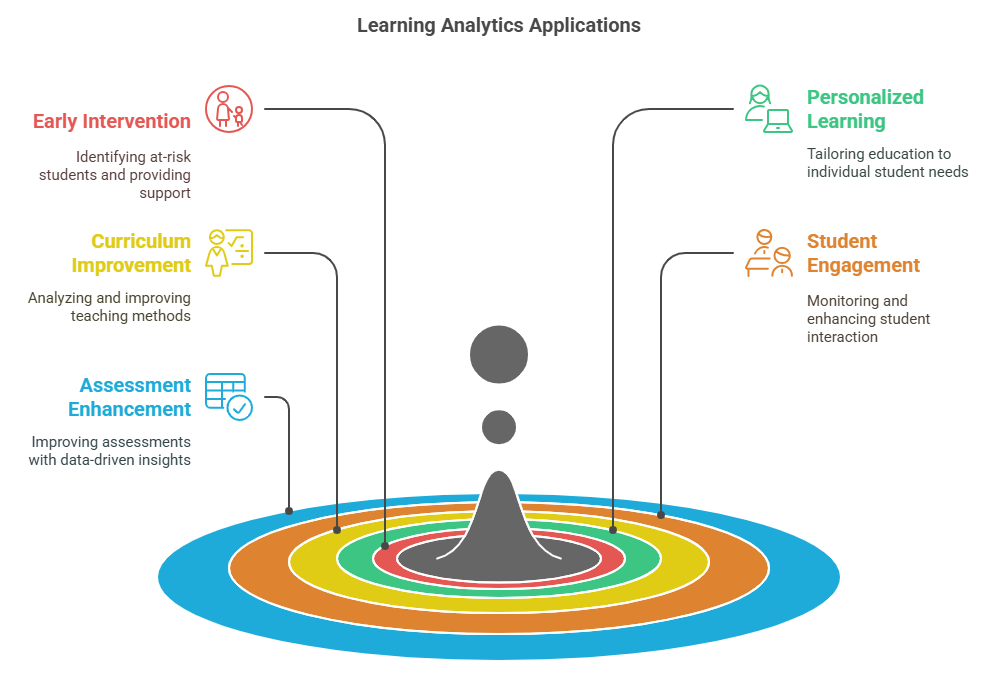
- Early Intervention: Identifying students who are at risk of dropping out or underperforming and providing targeted support.
- Personalized Learning: Tailoring learning materials and activities to individual student needs, helping them achieve mastery at their own pace.
- Curriculum and Instruction Improvement: Analyzing which content or teaching methods work best, allowing instructors to adjust their strategies.
- Student Engagement Monitoring: Tracking student interactions with course materials to understand engagement levels and adapt instruction accordingly.
- Assessment and Feedback: Enhancing formative and summative assessments through data-driven insights, enabling timely feedback and improvements.
Types of Learning Analytics
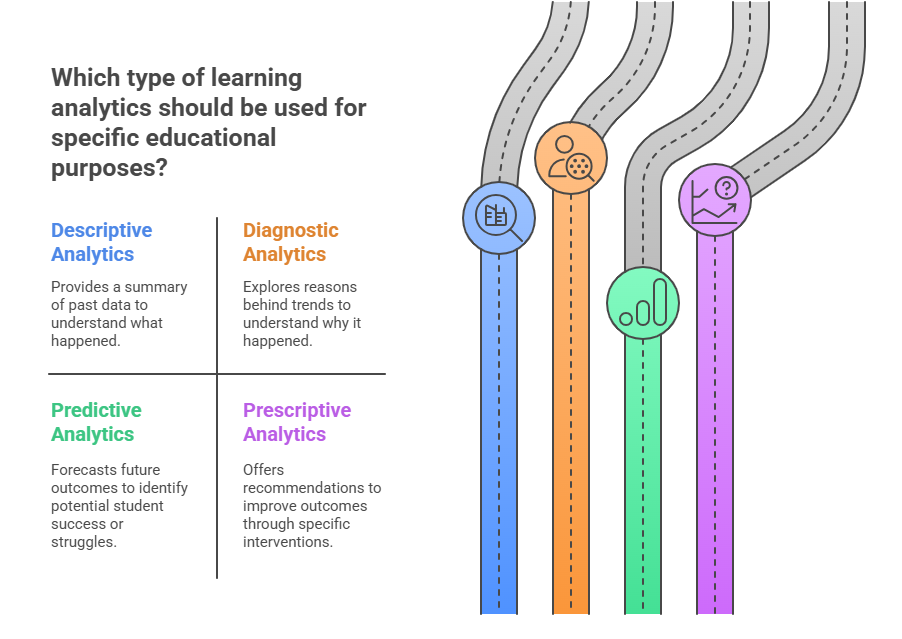
- Descriptive Analytics: Provides a summary of past data to answer “What happened?”
- Diagnostic Analytics: Explores the reasons behind certain trends or issues to answer “Why did it happen?”
- Predictive Analytics: Uses historical data and patterns to forecast future outcomes, such as identifying students likely to succeed or struggle.
- Prescriptive Analytics: Offers specific recommendations to improve outcomes, suggesting specific interventions based on analytics.
Benefits of Learning Analytics
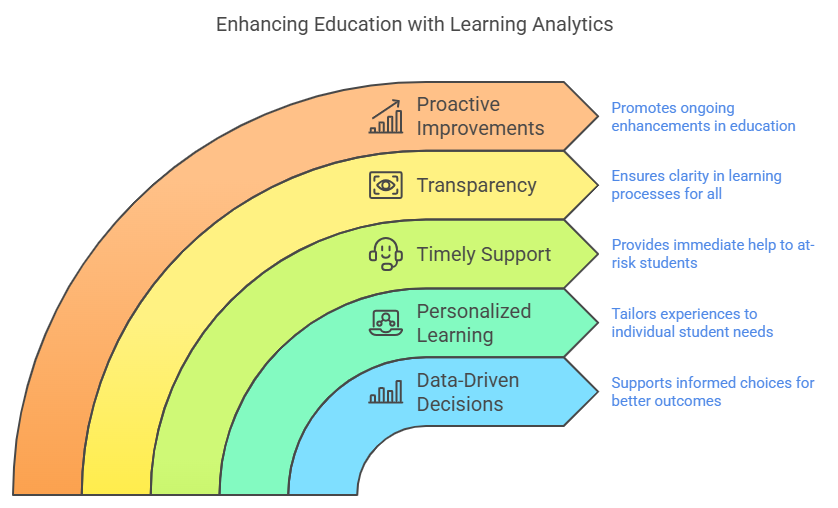
- Supports data-driven decisions for improving learning outcomes.
- Helps educators personalize learning experiences for diverse student needs.
- Provides timely support for students, especially those who may be at risk.
- Enhances the transparency of learning processes for all stakeholders.
- Encourages a proactive approach in education, fostering continuous learning improvements.
Challenges in Learning Analytics
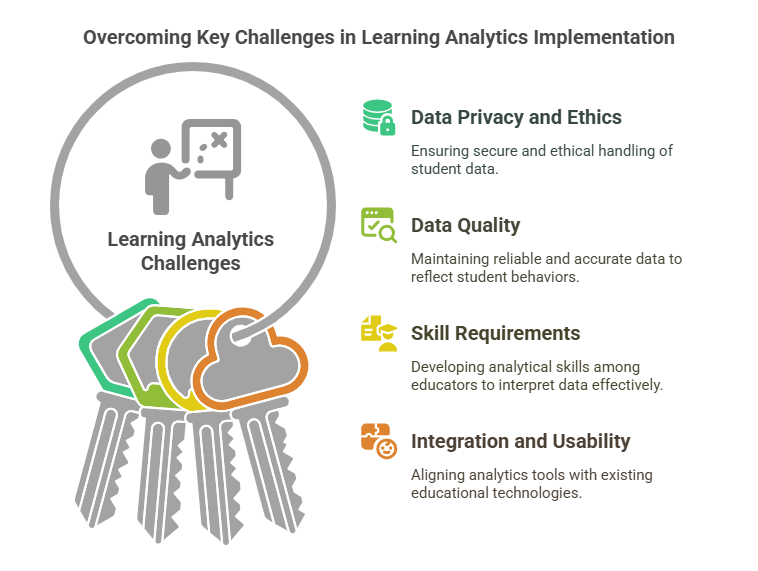
- Data Privacy and Ethics: Ensuring student data is handled securely and ethically.
- Data Quality: Having reliable, clean data that accurately reflects student behaviors.
- Skill Requirements: Educators and institutions need to develop analytical skills to interpret and act on data.
- Integration and Usability: Aligning Learning Analytics tools with existing educational technologies and practices.
Learning Analytics Roadmap
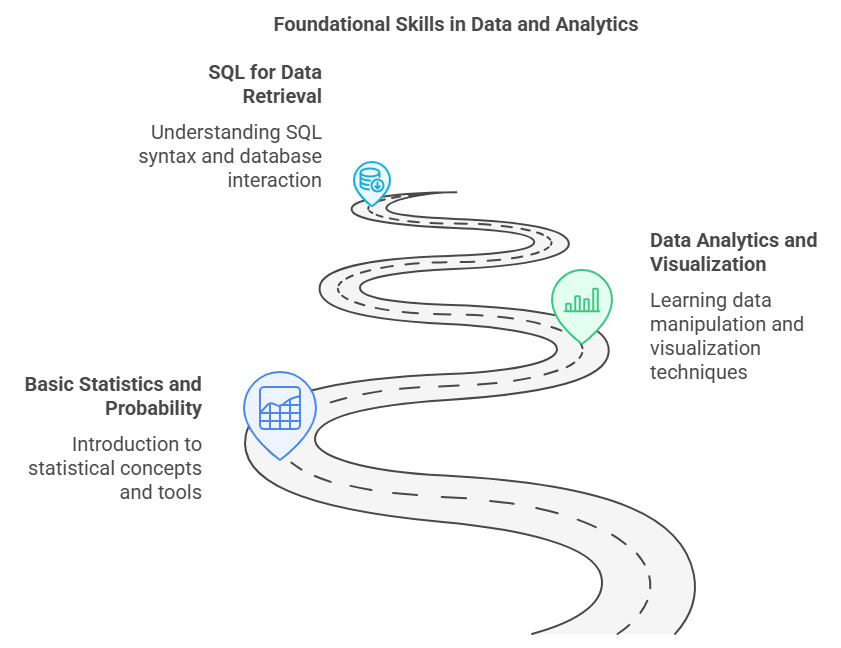
Phase 1: Foundational Skills in Data and Analytics (Weeks 1-8)
- Basic Statistics and Probability
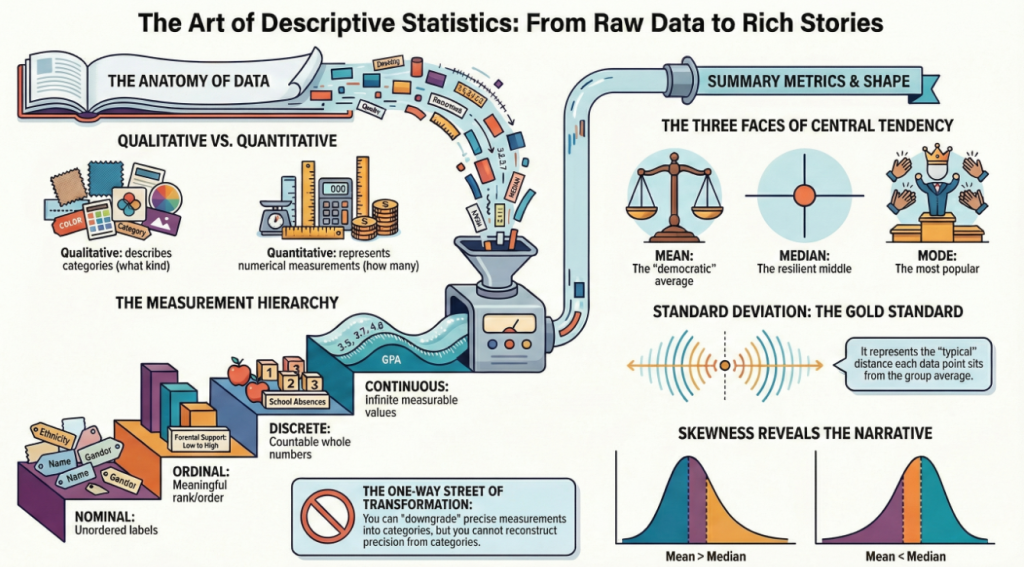
- Key Concepts: Mean, median, mode, standard deviation, distributions, probability.
- Tools: Excel, R, or Python for basic statistical analysis.
- Resources: Online courses in statistics (Khan Academy, Coursera).
- Data Analytics and Visualization
- Learn to clean, manipulate, and visualize data.
- Tools: Excel, Power BI, Tableau, R, or Python.
- Resources: Beginner courses on Tableau or Power BI; introductory tutorials in R/Python for data visualization (matplotlib, seaborn).
- SQL for Data Retrieval
- Basic SQL syntax, filtering, and aggregations.
- Learn how to connect and retrieve data from databases.
- Resources: SQL for Data Science courses on platforms like DataCamp or Udemy.
Phase 2: Core Learning Analytics Skills (Weeks 9-16)
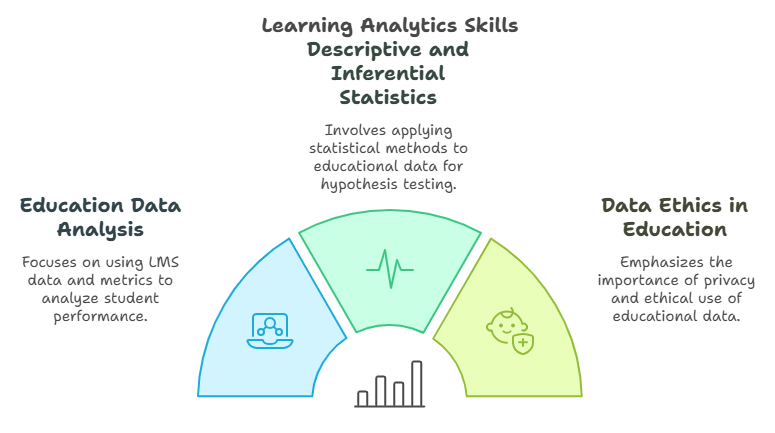
- Education Data Analysis
- Key Concepts: Learning management system (LMS) data, student performance metrics, engagement metrics.
- Tools: R or Python for education-specific data analysis (e.g., Jupyter Notebook, RStudio).
- Practice with educational datasets or simulated datasets focused on student outcomes, engagement, and feedback.
- Descriptive and Inferential Statistics
- Deepen knowledge in t-tests, ANOVA, regression, and chi-square tests.
- Focus on hypothesis testing relevant to educational contexts.
- Resources: Intermediate statistics courses and tutorials.
- Data Ethics in Education
- Understand ethical considerations around data privacy, consent, and fair use in educational data.
- Resources: Online articles and research papers on data ethics in education.
Phase 3: Advanced Analytical Techniques (Weeks 17-24)
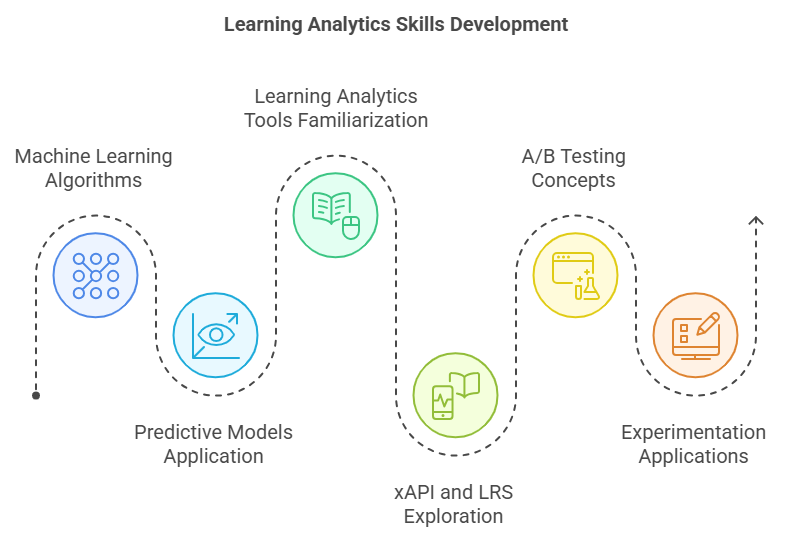
- Machine Learning and Predictive Analytics
- Learn basic ML algorithms relevant to education (e.g., decision trees, logistic regression).
- Apply predictive models to understand trends and forecasts in student performance.
- Tools: Python (Scikit-learn), R (caret package).
- Learning Analytics Tools and Platforms
- Familiarize yourself with LMS analytics tools (e.g., Canvas, Blackboard analytics).
- Explore tools like xAPI and Learning Record Stores (LRS) for tracking learning data.
- Resources: Documentation and webinars provided by LMS vendors.
- A/B Testing and Experimentation
- Concepts: Control and treatment groups, randomization, interpreting experimental results.
- Applications: Testing the effectiveness of learning interventions or course modifications.
Phase 4: Instructional Design and Educational Research (Weeks 25-32)
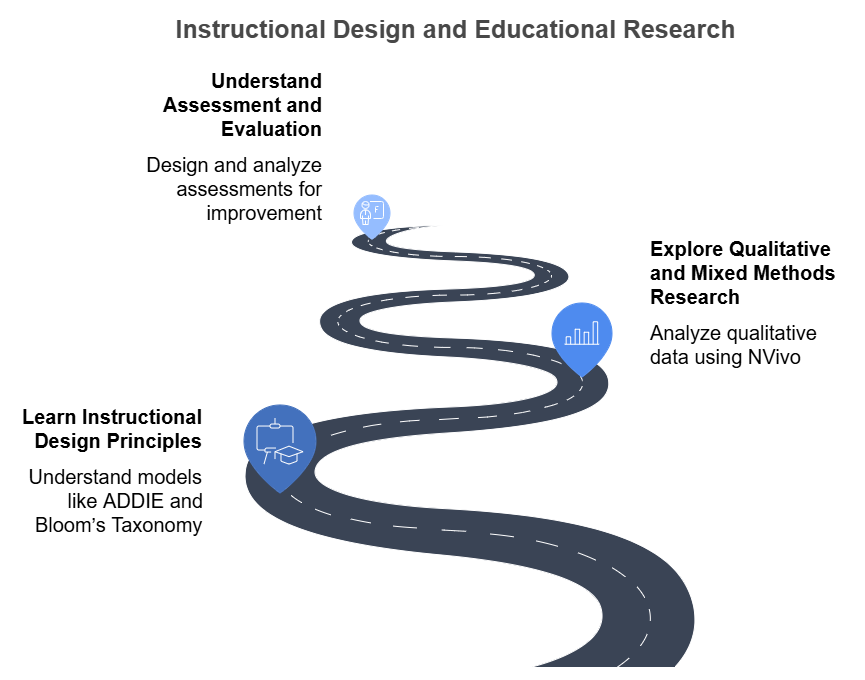
- Instructional Design Principles
- Learn models like ADDIE and Bloom’s Taxonomy to understand how instructional design can improve learning.
- Resources: Instructional design courses or resources on instructional theories.
- Qualitative and Mixed Methods Research
- Learn qualitative data analysis to understand student feedback and experiences.
- Tools: NVivo for qualitative data; use of mixed methods combining quantitative and qualitative insights.
- Assessment and Evaluation
- Understand formative and summative assessment strategies.
- Learn to design and analyze assessments for continuous improvement in instruction.
- Resources: Online courses on educational assessment.
Phase 5: Capstone Projects and Practical Application (Weeks 33-40)
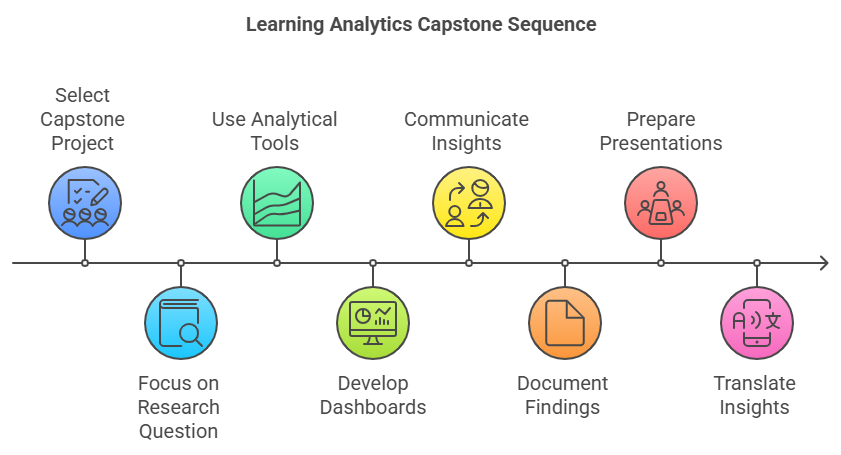
- Capstone Project in Learning Analytics
- Select a project analyzing real or simulated educational data.
- Focus on a research question (e.g., “How does LMS usage correlate with student outcomes?”).
- Tools: Use end-to-end tools and techniques learned in prior phases.
- Developing Reporting and Dashboarding Skills
- Create dashboards to communicate key insights to stakeholders.
- Tools: Tableau, Power BI, or Google Data Studio.
- Documentation and Presentation
- Document findings and prepare presentations for educators or institutional stakeholders.
- Practice translating data insights into actionable recommendations for education strategies.
Phase 6: Continuous Learning and Advanced Topics (Ongoing)
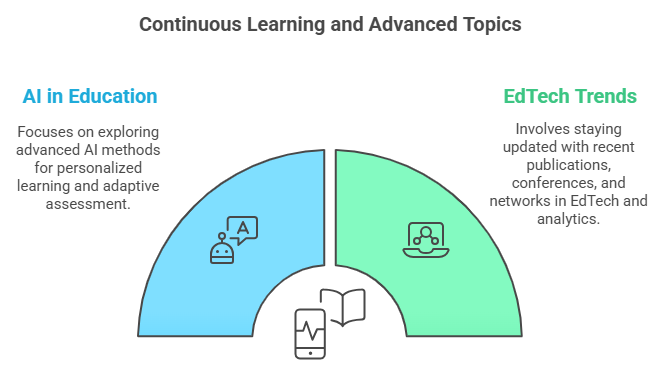
- Deep Dive into AI in Education
- Explore advanced AI methods for personalized learning and adaptive assessment.
- Resources: Research papers, AI in education forums.
- Stay Updated on Trends in EdTech and Analytics
- Follow recent publications, conferences, and networks (e.g., Learning Analytics and Knowledge Conference).
- Engage in forums and communities around learning analytics.