I. Introduction: The Power of Data in Education
Defining Learning Analytics: Bridging Data and Learning Outcomes
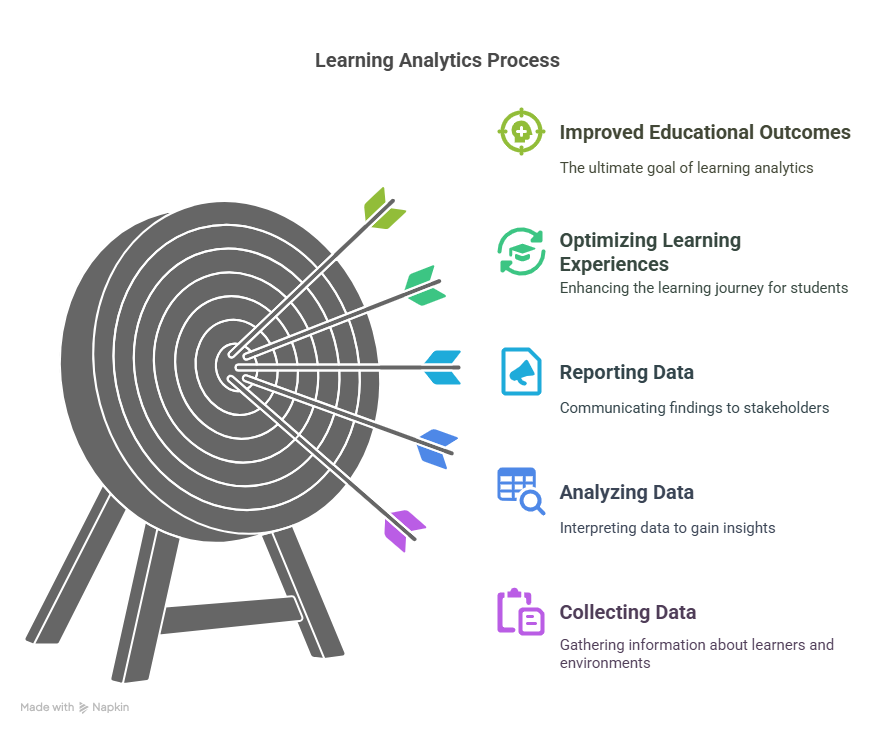
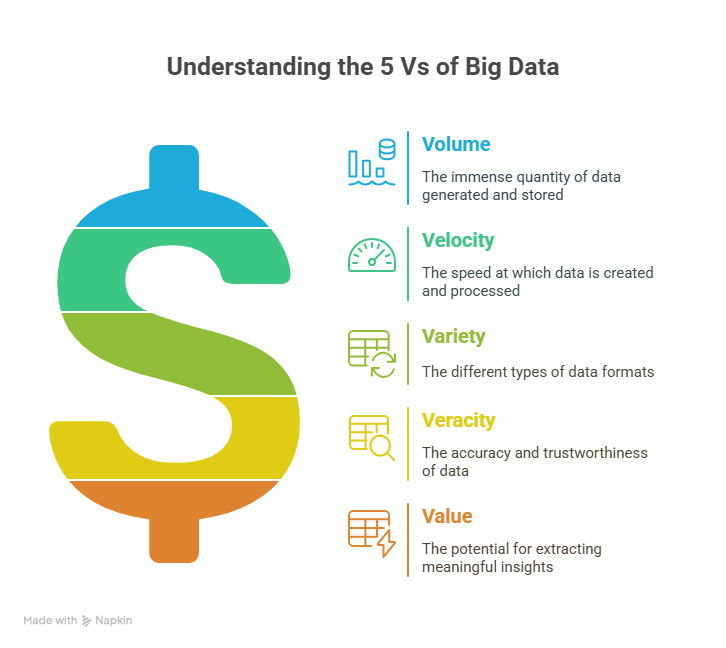
Learning analytics (LA) represents a transformative discipline focused on the systematic collection, measurement, analysis, and reporting of data pertaining to learners and their educational environments. Its fundamental purpose is to foster a deeper comprehension of learning processes and to optimize learning outcomes.1 This field effectively marries the principles of “big data” with established quantitative methodologies prevalent in education. Big data refers to extremely large and complex datasets that are difficult to process using traditional data processing methods. It is characterized by its volume, velocity, variety, and veracity.
At its practical core, learning analytics is about converting raw data into actionable insights.2 This involves identifying discernible patterns, uncovering significant trends, and addressing challenges to refine and enhance the e-learning experience.6 The progression of this field indicates a clear shift from mere data measurement to a continuous cycle of optimization. While initial definitions often highlight the mechanics of “measurement, collection, analysis, and reporting” 1, a deeper examination of the discipline’s objectives consistently reveals its ultimate aim: “understanding and improving learning outcomes” 1, “transforming data into actionable insights” 6, and the overarching goal to “optimize education”.6 This collective emphasis underscores that learning analytics is not simply about documenting past events, but about understanding the underlying causes and proactively implementing improvements. The focus on generating “actionable insights” 2 and “optimizing the e-learning process” 7 signifies a proactive stance, where data directly informs interventions and strategic design modifications, thereby fostering a continuous improvement paradigm.
Why Learning Analytics Matters: Revolutionizing Educational Practices
Learning analytics is fundamentally reshaping contemporary education by empowering educators to customize learning experiences for individual students and significantly improve overall academic performance.2 This approach infuses a “human-centered design” philosophy into the realm of education and educational technology.6
The critical value of learning analytics lies in its capacity to furnish instructors with practical, actionable information. This enables them to identify students who may be struggling at an early stage, design educational pathways that are personalized to individual needs, and objectively assess the efficacy of various teaching methodologies.2 Furthermore, learning analytics plays a pivotal role in supporting strategic institutional decision-making. It assists schools and universities in optimizing resource allocation and provides concrete data to substantiate the adoption of new learning systems, demonstrating a tangible return on investment.2 The ability of learning analytics to “identify struggling students early” 2 and to “forecast future outcomes” 2 represents a significant shift from reactive educational responses to proactive intervention. This proactive capability, combined with the power to “tailor educational experiences to individual needs” 2, means that learning analytics is not merely about elevating average outcomes. Instead, it focuses on optimizing the distinct learning journey for each student. This profound level of personalization leads to heightened student engagement and contributes to a reduction in dropout rates, effectively addressing long-standing challenges within educational systems.
II. Core Concepts and Foundations of Learning Analytics
Key Terminology: The Language of Learning Data
To effectively engage with learning analytics, an understanding of its foundational terminology is essential:
- Data Mining: This refers to the systematic process of discovering meaningful patterns and uncovering hidden relationships within extensive datasets.3 It serves as a cornerstone technique within learning analytics, facilitating various analytical approaches such as prediction, clustering, relationship mapping, and the discovery of models for deeper understanding.4
- Predictive Modeling/Analytics: This methodology involves leveraging historical data, often in conjunction with machine learning algorithms, to forecast future student performance.2 A primary application is the early identification of students who may be at academic risk, which then informs proactive interventions.2
- Learning Dashboards: These are intuitive visual representations of compiled data that offer immediate insights into learner behavior and overall performance.3 They are designed to provide real-time feedback, making complex data accessible and actionable for educators and learners alike.
- xAPI (Experience API): This is a technical specification designed for tracking a wide array of learning experiences across diverse platforms and devices.3 Its significance lies in its ability to provide a more comprehensive and holistic view of learning activities, extending beyond the limitations of data traditionally captured solely within a Learning Management System (LMS).
The progression from descriptive analytics (describing what has happened) to diagnostic analytics (explaining why it happened), then to predictive analytics (forecasting what will happen), and finally to prescriptive analytics (recommending what actions should be taken) 4 illustrates a deepening sophistication in the application of learning analytics. Data mining forms the fundamental layer, enabling the identification of underlying patterns.3 Predictive modeling then builds upon these patterns to anticipate future behaviors.2 Learning dashboards serve as the critical interface, translating this complex data into easily digestible visual formats that support immediate action.3 The role of xAPI is particularly vital for capturing a broader spectrum of learning interactions, moving beyond the confines of a single LMS. This capability is essential for generating truly holistic and personalized insights into the learning process. This continuous evolution signifies a clear trajectory towards more intelligent, responsive, and automated support systems for both learners and educators.
Theoretical Underpinnings: Informing the “How” and “Why” of Learning
Learning analytics is a multidisciplinary field, drawing extensively from various established learning theories. These include social constructivism, which emphasizes learning through social interaction; situated cognition, highlighting the importance of context in learning; and self-regulated learning, focusing on learners’ active control over their own learning process.3 These theories collectively underscore the significance of context, social engagement, and learner agency in shaping the educational experience.
Historically, the emergence of learning analytics was heavily influenced by a period of “strong empiricism,” initially prioritizing the opportunities presented by new technologies and the sheer availability of data.13 This early phase often focused on merely “telling the time” – that is, reading and reporting the data that could be found – with less emphasis on questioning the deeper mechanisms of how learning actually occurs or the underlying perceptions of learning.13 However, the field has matured significantly. More contemporary theoretical frameworks integrate concepts such as cognitive task analysis, which systematically breaks down complex tasks into their cognitive components; distributed cognition, recognizing that intelligence is distributed across individuals, tools, and environments; and competency-based education theories, which focus on the mastery of specific skills rather than just curriculum completion.14 These integrations aim to provide a more profound and nuanced understanding of learner performance and behavior as it evolves over time.14
The initial pragmatic, data-driven approach of learning analytics, while powerful for identifying observable phenomena such as student dropout rates, has evolved to incorporate a deeper theoretical grounding. Understanding why students exhibit certain behaviors or encounter difficulties with particular concepts necessitates this theoretical foundation. For example, the application of competency-based education theories allows learning analytics to track student progress not solely through traditional grades but by assessing their mastery of specific skills and competencies.14 This leads to more meaningful and targeted personalization of learning pathways. This ongoing integration of pedagogical theory ensures that learning analytics transcends a purely technical exercise, transforming into a pedagogically informed tool capable of understanding the cognitive, emotional, and social dimensions of learning, moving beyond mere behavioral observation.13
The Learning Analytics Process: From Data Collection to Actionable Insights
The typical learning analytics system operates through a structured, sequential pipeline designed to transform raw data into meaningful educational improvements. This process begins with Data Collection, where various forms of learner data are gathered. This is followed by Data Storage, where the collected information is securely housed. The subsequent phase is Data Analysis, during which sophisticated techniques are applied to identify patterns and trends within the stored data. These analytical findings are then translated into accessible Data Visualization, often through dashboards, to facilitate understanding. The visualized data then leads to Insight Generation, where meaningful conclusions about learning behaviors and outcomes are drawn. The final and most critical step is Decision Making, where these insights are used to inform practical changes and interventions.3
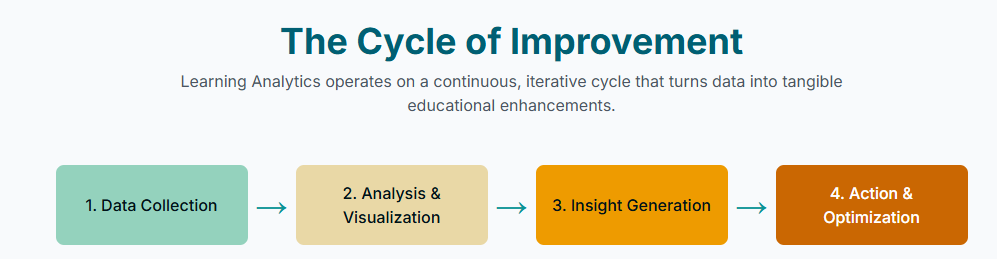
This comprehensive process enables the continuous refinement and enhancement of educational content, the optimization of course durations, and the precise adjustment of learning materials to align with individual learner needs and preferences.7 The sequential steps of the learning analytics process highlight that it is not a one-time activity but rather an iterative and dynamic cycle. Data collection feeds into analysis, which in turn generates valuable insights. These insights then directly inform decisions, and the subsequent impact of these decisions generates new data, thus restarting the cycle. This continuous feedback loop is fundamental for achieving ongoing optimization in educational practices.7 The “Decision Making” stage represents the ultimate objective of this entire process, as it translates raw data into tangible modifications in educational design and delivery, thereby emphasizing the inherently practical and applied nature of learning analytics.
III. Data Sources and Key Metrics in Learning Analytics
Where Learning Data Resides: Common Sources
The efficacy of learning analytics is directly tied to the breadth and depth of the data collected. This data originates from a diverse array of sources within the educational ecosystem:
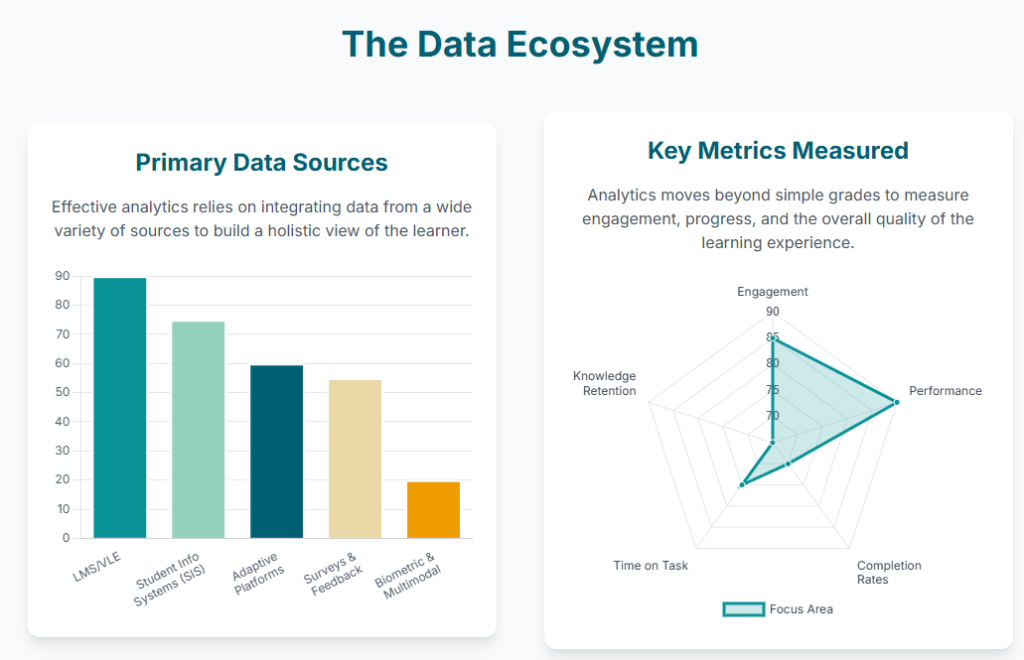
- Virtual Learning Environments (VLEs) / Learning Management Systems (LMS): These platforms serve as the primary conduit for learning data. They capture a wealth of information, including student access to courses, timetables, homework submissions, frequency and timing of resource access, the volume of discussion posts generated and read, and the specific types of resources learners engage with.2 Prominent examples include Moodle and Canvas, both widely used for their data collection capabilities.12
- Student Information Systems (SIS): These centralized systems house crucial demographic data, records of prior academic qualifications, grades, and socioeconomic status, providing important contextual information about learners.4
- Adaptive Learning Platforms & Educational Apps: These specialized tools generate data on individual student progress, adjustments made to content difficulty levels, and the effectiveness of personalized learning pathways.2
- Surveys and Self-Reflections: Qualitative data, such as student feedback and self-assessments, offers valuable insights into learner experiences, perceptions, and metacognitive processes.6
- Attendance Monitoring Systems & Library Data: These sources provide supplementary information, offering insights into physical presence in educational settings and patterns of resource utilization, such as book checkouts or database access.4
- Online Pedagogical Platforms & Massive Open Online Courses (MOOCs): These digital learning environments are rich repositories of interaction data, including forum participation, content consumption, and assessment attempts.4
- Emerging Data Sets: The field is increasingly incorporating more advanced and nuanced data. This includes mobile device usage data, biometric data (such as gaze tracking, gestures, posture, heart rate, facial expressions, and body language), and even mood data.4 These newer data types are crucial for gaining deeper insights into the affective and physiological states of learners.
The expansion of data sources, moving from traditional LMS and SIS data to adaptive platforms and, more recently, to biometric and multimodal data 4, reflects a growing imperative to capture a more complete and nuanced representation of the learner. While early learning analytics primarily focused on easily quantifiable “clickstream” data, the inclusion of physiological and contextual data indicates a significant evolution. This progression aims to understand the cognitive and emotional states of learners, rather than merely their overt actions. This broadening of data collection allows for a more holistic understanding of engagement and the intricate learning processes, laying the groundwork for the development of truly adaptive and empathetically designed educational systems.
Measuring Learning: Essential Metrics for Understanding Progress and Engagement
To derive meaningful insights from the collected data, learning analytics employs a range of essential metrics:
- Time on Task/Session Length: This metric quantifies the duration a student spends on specific activities, lessons, or logged into a learning platform.3 It can serve as an indicator of student engagement or, conversely, suggest areas where content might be particularly challenging.5
- Student Performance/Grades/Assessment Scores: This category encompasses quiz and exam scores, assignment grades, and overall academic performance metrics.3 These are direct measures of content mastery and learning achievement.
- Engagement Metrics: These provide a quantitative measure of student interaction with learning materials and peers. Examples include login frequency, active participation in discussion forums, utilization of study tools, manipulation of video controls (e.g., play, fast-forward, rewind), and the number of discussion posts generated and read.2
- Completion Rate/Dropout Rate: This indicates the percentage of students who successfully finish a course or module, and conversely, the proportion who fail to complete it.7 These metrics are crucial for identifying specific points of difficulty within a curriculum and for informing improvements to content design.7
- Knowledge Retention & Application: Measured through assessments and simulations, these metrics evaluate how effectively learners retain information over time and apply newly acquired skills in practical contexts.18
- Training Intake Results: Relevant in corporate or vocational training, this includes the volume and specific topics of training requests received, as well as identified skill gaps within a workforce.11
- Performance-Related Data: This metric assesses whether participants are actively integrating their learning into their job roles, thereby directly impacting business outcomes and organizational effectiveness.11
The evolution of learning analytics metrics demonstrates a progression from simple, surface-level indicators to a more profound assessment of learning quality and impact. While early learning analytics often focused on easily quantifiable actions such as login frequency or time spent 3, which provided basic activity tracking, the inclusion of metrics like “knowledge retention and application” 18 represents a significant advancement. Furthermore, the adoption of evaluation models such as the Kirkpatrick model 11 to assess learner reaction, knowledge acquisition, behavioral change, and tangible results signifies a deliberate move towards measuring the
quality and impact of learning, rather than merely participation. This deeper analytical focus enables a direct correlation between learning activities and desired educational or organizational outcomes 11, thereby substantiating the “true value” 9 of learning analytics beyond simple activity monitoring.
Table 1: Key Learning Analytics Data Types and Their Sources
| Data Type Category | Specific Examples | Primary Sources |
| Behavioral Data | Time on task, login frequency, discussion posts, resource views, use of video controls (play/fast-forward/rewind), gestures, posture, eye gaze | Learning Management Systems (LMS/VLE), Adaptive Learning Platforms, Educational Apps, Online Pedagogical Platforms, MOOCs, Wearable Devices/Sensors 4 |
| Performance Data | Assignment grades, exam scores, quiz answers, module completion rate, course dropout rate, knowledge retention, knowledge application | LMS/VLE, Student Information Systems (SIS), Adaptive Learning Platforms, Educational Apps, Surveys, Assessment Systems 3 |
| Demographic Data | Prior qualifications, socioeconomic status, age, gender | Student Information Systems (SIS), Enrollment Systems 4 |
| Affective/Physiological Data | Heart rate, facial expressions, body language, mood data | Wearable Devices/Sensors, Multimodal Learning Analytics Systems 4 |
| Content Interaction Data | Number of times resource accessed, date and time of access, types of resources accessed | LMS/VLE, Educational Apps, Online Pedagogical Platforms 4 |
| Survey/Qualitative Data | Survey responses, self-reflections, discussion board content (for NLP analysis) | Surveys, LMS/VLE discussion forums 6 |
Table 2: Essential Learning Analytics Metrics and Their Practical Insights
| Metric | What it Reveals (Practical Insight) | Potential Action |
| Time on Task / Session Length | Student engagement levels; potential difficulty with content; course appeal | Adjust lesson pacing; provide targeted support for struggling areas; redesign content for better engagement 5 |
| Completion Rate / Dropout Rate | Effectiveness of course design; identification of “sticking points” or difficult modules; learner motivation issues | Redesign problematic modules; offer alternative learning formats (e.g., tutoring, shorter activities); enhance support systems 7 |
| Engagement (Discussion/Resource Access) | Student participation; areas of high/low interest; collaborative dynamics | Modify content to increase interactivity; encourage participation through prompts; identify and support isolated learners 2 |
| Assessment Scores / Grades | Content mastery; areas where students consistently struggle or excel; effectiveness of teaching methods | Revise curriculum for clarity; provide enrichment for advanced learners; offer remedial support for struggling students 5 |
| Predictive Risk Scores | Early warning signs for students at risk of failure or dropout | Proactive interventions (e.g., academic advising, tutoring, personalized outreach); adjustment of instructional strategies 2 |
| Knowledge Retention / Application | Long-term effectiveness of training; ability to apply skills in real-world scenarios; ROI of educational programs | Refine training methods (e.g., incorporate simulations); reinforce learning through practice; adjust program objectives to business outcomes 11 |
| Training Intake Results | Demand for specific skills; existing skill gaps within an organization | Develop targeted training programs; allocate resources to high-demand areas; align training with strategic business needs 11 |
IV. Practical Applications: Learning Analytics in Action
Learning analytics translates theoretical concepts into tangible improvements across various educational contexts, from K-12 schools to higher education institutions and corporate training programs.
Personalizing Learning Experiences: Tailoring Education to Individual Needs
Learning analytics provides educators with the granular data necessary to identify the diverse learning methods and paces of individual students. This capability allows for the precise tailoring of instruction, the provision of appropriate resources, and the delivery of customized feedback that resonates with each learner’s unique requirements.2
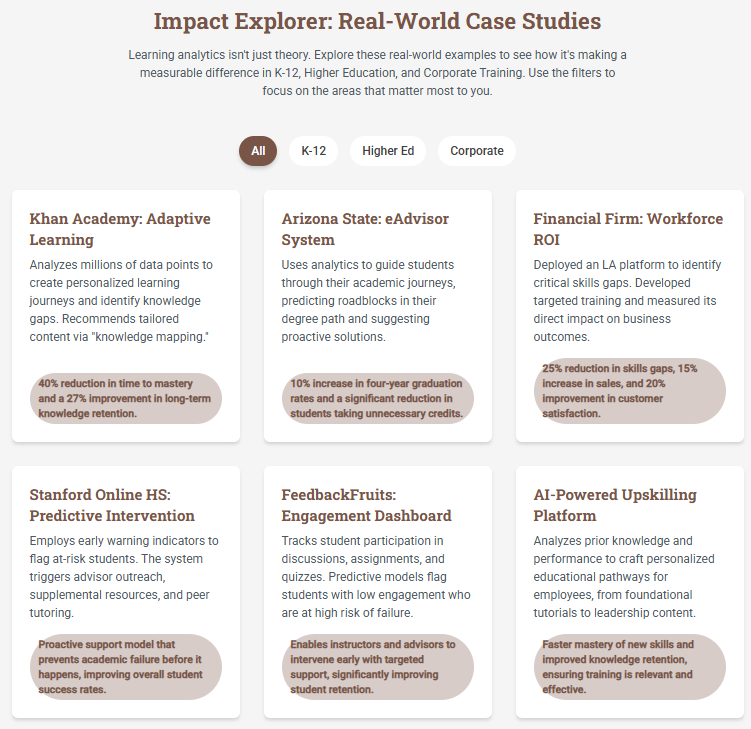
Real-Life Example (K-12): Khan Academy’s Adaptive Learning Ecosystem. Khan Academy has successfully implemented embedded analytics to power truly personalized learning journeys.10 Their system analyzes millions of data points daily to identify specific knowledge gaps and subsequently recommends tailored content to address those deficiencies. A particularly innovative feature is their “knowledge mapping” technology, which visually represents each student’s mastery across interconnected concepts. This data-driven approach has yielded remarkable results, including a 40% reduction in time to mastery for key mathematical concepts and a 27% improvement in long-term knowledge retention.10 This exemplifies how data can fundamentally shift education from a “one-size-fits-all” model to a learner-centered paradigm 14, where instruction adapts dynamically to the individual.
Real-Life Example (Corporate): AI-Powered Adaptive Learning in Workforce Upskilling. In corporate environments, AI-driven adaptive learning systems utilize learning analytics to meet individual employee needs effectively.8 These systems analyze factors such as prior knowledge, learning preferences, and performance data to create personalized educational pathways that enhance engagement and outcomes. For instance, if an employee struggles with advanced math concepts, the system can automatically recommend foundational tutorials to reinforce understanding. Similarly, an AI-driven system might align learning modules with career goals, suggesting leadership development content to a high-performing employee aspiring to management roles.8 The tangible benefits, such as faster mastery and improved retention, demonstrate a fundamental shift in instructional design enabled by data.
Predicting Student Performance and Providing Early Intervention: Proactive Support
One of the most impactful applications of learning analytics is its ability to move beyond merely describing current trends to forecasting future outcomes. This predictive capability allows for the early identification of students who are at risk of falling behind academically or even dropping out of a program.2 This proactive insight enables educators to implement timely measures, such as offering additional instruction, arranging tutoring opportunities, or adjusting instructional strategies before significant academic challenges arise.2
Real-Life Example (Higher Education): FeedbackFruits Student Engagement Dashboard. Universities utilize tools like the FeedbackFruits student engagement dashboard to track student participation levels in key activities, such as discussion posts, assignments, and quizzes, alongside their performance in assessments.19 Predictive analytics, often integrated into such systems, can flag students who exhibit low engagement early in a course and whose historical data indicates a high probability of failure. This allows advisors and instructors to intervene proactively, offering targeted support and adjusting learning plans as necessary.6 This approach represents a critical shift from remediation to prevention.
Real-Life Example (K-12): Stanford Online High School’s Predictive Intervention. Stanford Online High School has implemented a system that uses early warning indicators to identify students at risk of academic difficulty.10 When a student’s risk score surpasses a predefined threshold, the system automatically triggers a cascade of intervention protocols. These can include direct outreach from an academic advisor, recommendations for supplemental resources, or connections to peer tutoring networks.10 This proactive capability, enabled by predictive analytics, fundamentally changes the role of educators from reacting to failures to actively preventing them. By identifying “at-risk students early” 2, institutions can deploy timely and targeted support, which is often far more efficient and effective than attempting to salvage a failing student later in their academic journey. This proactive approach not only improves individual student outcomes but also significantly contributes to higher retention rates for educational institutions.10
Optimizing Teaching Strategies and Course Content: Enhancing Educational Design
Learning analytics provides educators with invaluable insights into what learning content genuinely engages students, what pedagogical approaches are effective, and what aspects of a course may not be working as intended.12 It can reveal specific patterns, such as certain assessments consistently proving too challenging or, conversely, too easy for the student cohort.9
Data derived from learning analytics can serve as a clear signal for when existing course materials require updates or modifications to ensure their continued relevance and accessibility.5 Furthermore, it can inform decisions regarding the optimal sequencing of lessons to enhance student comprehension.6 This allows for data-driven instructional refinement.
Real-Life Example (K-12): Course Content Optimization. In K-12 settings, teachers can utilize detailed learner analytics reports to identify specific topics or chapters that students are struggling with, or conversely, those they have mastered exceptionally well.5 This allows them to revise or redesign certain topics to simplify them, or to determine if a particular student requires additional attention on a difficult subject.5 For instance, analyzing video heatmaps within an e-learning platform can reveal segments that students frequently skip or re-watch, providing direct evidence for where content might be less engaging or require further clarification, informing precise adjustments for future iterations.12
Real-Life Example (Higher Education): Curriculum Redesign. At the higher education level, if analytics consistently show that students struggle with a particular learning objective or with collaborative assignments, educators can leverage this data to redesign that specific part of the curriculum.19 This might involve incorporating more interactive materials, providing additional supportive resources, or implementing different assessment methods to better facilitate learning.19 This application demonstrates how learning analytics moves curriculum development and teaching strategy from reliance on intuition or periodic, broad reviews to a continuous, data-informed process.3 The ability to pinpoint specific “sticking points” 7 or “struggling objectives” 19 allows for highly granular and effective adjustments, leading to more effective and engaging educational experiences that directly impact learning outcomes.
Supporting Institutional Decision-Making: Strategic Planning and Resource Allocation
Beyond supporting individual learners and instructors, learning analytics provides concrete, quantitative data that empowers administrators in both K-12 and higher education to justify strategic decisions to governing boards, policymakers, and other key stakeholders.2 It is instrumental in evaluating the overall effectiveness of academic programs, informing judicious resource allocation, and guiding long-term strategic planning initiatives.2 The discipline helps institutions assess the success of their educational initiatives by measuring their performance in real, measurable terms.2
Real-Life Example (Higher Education): Program-Level Adjustments. At the program level, administrators can leverage cohort data to review performance across multiple courses and semesters.19 This allows them to identify areas where students enrolled in a particular major consistently underperform. Such insights can then lead to strategic decisions, such as allocating additional resources like tutoring services or redesigning entire program sequences to better prepare students for challenging competencies.19 Arizona State University’s eAdvisor system provides a compelling illustration, utilizing embedded analytics to guide students throughout their academic journeys.10 The system tracks course selections, grades, and progress toward degree requirements, offering automated guidance and alerts. Its sophisticated algorithm predicts potential roadblocks in a student’s academic path and suggests proactive solutions, which has resulted in a 10% increase in four-year graduation rates and a significant reduction in students taking unnecessary credits.10
Real-Life Example (Corporate): Workforce Development and ROI. In the corporate sector, a leading financial services organization successfully deployed a learning analytics platform to address challenges in workforce development.20 This platform was used to identify critical skills gaps and knowledge deficiencies across the organization. Based on these insights, targeted training programs were developed to address specific business needs. Crucially, the platform also measured the direct impact of this training on key business outcomes, such as sales performance and customer satisfaction. The results were substantial, including a 25% reduction in skills gaps, a 15% increase in sales performance among trained employees, and a 20% improvement in customer satisfaction ratings.20 This demonstrates how learning analytics can also predict employee turnover and identify at-risk employees, further optimizing human capital strategies.20 This application of learning analytics provides a quantitative basis for high-level institutional and corporate decisions.2 It is vital for accountability to stakeholders and for demonstrating the tangible value of educational investments. By measuring the impact of training on business outcomes 20 or graduation rates 10, learning analytics shifts the conversation from qualitative assumptions to data-backed evidence, enabling more strategic resource allocation and a clearer return on investment for educational programs.
Table 3: Learning Analytics Applications and Real-Life Examples
| Application Area | Educational Context | Real-Life Example | Key Outcome/Benefit |
| Personalizing Learning | K-12 Education | Khan Academy’s Adaptive Learning Ecosystem: Analyzes millions of data points to create personalized learning journeys, identifies knowledge gaps, and recommends tailored content via “knowledge mapping.” 10 | 40% reduction in time to mastery for key math concepts; 27% improvement in long-term knowledge retention. 10 |
| Personalizing Learning | Corporate Training | AI-Powered Adaptive Learning in Workforce Upskilling: AI systems analyze prior knowledge, preferences, and performance to craft personalized educational pathways, recommending foundational tutorials or leadership development content. 8 | Enhanced engagement and outcomes; ensures employees receive relevant and timely content for their roles. 8 |
| Predictive Intervention | Higher Education | FeedbackFruits Student Engagement Dashboard: Tracks student participation and assessment performance to identify at-risk students, flagging those with low engagement who historically failed. 6 | Enables advisors to intervene early with targeted support; improved student retention. 19 |
| Predictive Intervention | K-12 Education | Stanford Online High School’s Predictive Intervention: Uses early warning indicators to flag at-risk students, triggering advisor outreach, supplemental resources, and peer tutoring. 10 | Proactive support to prevent academic failure; improved student success. 10 |
| Optimizing Content/Teaching | K-12 Education | Course Content Optimization: Teachers identify topics needing revision or redesign based on student performance patterns (e.g., struggling with a chapter, spending too much time). Video heatmaps show where content is skipped/re-watched. 5 | Simpler, more effective course modules; targeted attention for struggling students; improved engagement. 5 |
| Optimizing Content/Teaching | Higher Education | Curriculum Redesign: If analytics show consistent struggles with a learning objective or group assignments, educators redesign curriculum with more interactive materials, resources, or different assessment methods. 19 | Enhanced curriculum effectiveness; improved student comprehension and performance. 19 |
| Institutional Strategy/ROI | Higher Education | Arizona State University’s eAdvisor System: Uses analytics to guide students through academic journeys, predicting roadblocks and suggesting solutions for course selection and degree progress. 10 | 10% increase in four-year graduation rates; significant reduction in students taking unnecessary credits. 10 |
| Institutional Strategy/ROI | Corporate Training | Financial Services Organization’s Workforce Development: Implemented LA to identify skills gaps, develop targeted training, and measure impact on sales performance and customer satisfaction. 20 | 25% reduction in skills gaps; 15% increase in sales performance; 20% improvement in customer satisfaction. 20 |
V. Ethical Considerations and Responsible Use
The pervasive nature of data collection in learning analytics necessitates a robust framework of ethical principles and responsible practices to ensure its beneficial application.
Prioritizing Trustworthiness and Transparency
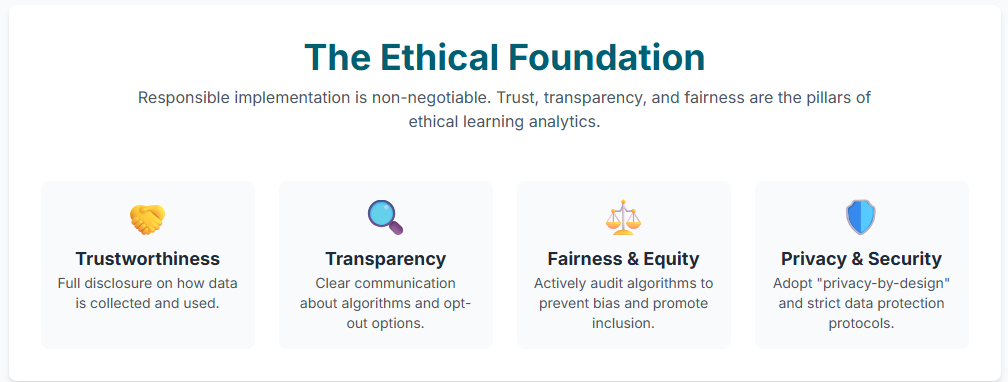
At the heart of any successful learning analytics implementation lies the fundamental principle of trustworthiness, which forms the bedrock of the relationship between students, staff, and institutions.24 Institutions bear the responsibility of ensuring full disclosure regarding their data practices to alleviate any concerns from students and staff about the appropriate use of their personal information.24
Transparency and clarity are not merely best practices but are legally mandated under various data protection legislations.24 Students must be comprehensively informed about what types of data are being collected, how that data will be utilized, the underlying mechanics of any algorithms (e.g., those identifying at-risk students), the ultimate purpose of the analytics, and crucially, how they can opt-out of analytics-led interventions.24 The repeated emphasis on “trustworthiness” and “transparency” 24 reveals a critical underlying condition for the successful adoption of learning analytics: human acceptance. If learners and educators do not trust how their data is being used, or if they perceive it as being used surreptitiously, the significant benefits that learning analytics offers will be undermined. This lack of trust can lead to resistance, non-compliance, and potentially legal challenges.24 This highlights that ethical frameworks are not simply compliance checkboxes but are, in fact, strategic imperatives for the long-term success and sustainability of learning analytics initiatives.
Safeguarding Data: Privacy, Security, and Best Practices
Learning analytics grants access to a vast array of potentially personal and sensitive data, which underscores the critical need for comprehensive staff training on the appropriate use and inherent limitations of this information.24 All data gathered or processed for learning analytics must be accurate, collected, analyzed, and stored in a secure manner that is consistent with industry best practices and fully compliant with relevant data protection legislation.24
Key considerations in safeguarding data include clearly defining who has authorized access to learner data, the extent to which users need to be informed about data collection, the specific requirements for obtaining learner consent, secure data storage locations, and the complex issue of data ownership.27 To mitigate risks, best practices advocate for
data minimization, meaning only collecting and processing data that is strictly necessary for the stated purpose.26
Explicit and informed consent from individuals is paramount.26 Access to student data should be
restricted to only those staff members with explicit responsibilities and permissions for its use, and data should be anonymized whenever feasible.27 Furthermore, adopting a
privacy-by-design approach ensures that privacy principles and safeguards are incorporated from the earliest stages of system design and development, rather than being treated as an afterthought.26 Continuous monitoring and auditing are also essential to ensure ongoing compliance and address any vulnerabilities.26 The extensive list of data sources discussed in Section III highlights the vast amount of personal information that learning analytics can potentially gather. This directly leads to significant risks to individual privacy 26 if the data is not handled with the utmost responsibility. The inherent tension lies in maximizing the utility of data for improving learning outcomes while simultaneously rigorously protecting individual privacy. The concept of “privacy-by-design” 26 is a crucial implication, suggesting that ethical considerations must be embedded into the system’s architecture from its inception. This also emphasizes the necessity for robust legal and policy frameworks, such as GDPR or FERPA, to guide the implementation of learning analytics.24
Ensuring Fairness and Avoiding Bias in Analytics
For learning analytics to be truly effective and equitable, it must be underpinned by a rigorous, scientific approach that is demonstrably free from bias.24 Models developed without such an approach can be incorrect, leading to unnecessary and potentially counterproductive interventions that waste resources and negatively impact students.24
A critical concern is that algorithms, particularly those based on machine learning, can inadvertently perpetuate or even amplify existing biases present in the training data. This can lead to unfair or discriminatory outcomes, especially for historically excluded or marginalized groups of learners.25 The concern about bias 24 extends beyond mere technical accuracy to encompass broader social justice implications. If learning analytics systems are constructed using biased historical data, there is a substantial risk that they will reinforce existing inequalities within the educational system.25 This places a moral and ethical obligation on developers and implementers to actively audit algorithms for fairness and to ensure that learning analytics promotes “inclusive excellence” 25 for all students. The “black box” nature of some advanced AI systems 26 further complicates this challenge, necessitating greater transparency in algorithmic decision-making processes to build trust and ensure accountability.
Table 4: Ethical Principles for Learning Analytics
| Principle | Practical Implication / Best Practice |
| Prioritize Trustworthiness | Foster open communication; ensure full disclosure of data use; ask “would students be surprised?” 24 |
| Focus on Benefitting Learning | Primary purpose is student learning; ensure data use aligns with this goal; train staff on appropriate data limitations. 24 |
| Maintain Transparency and Clarity | Clearly communicate what data is collected, how it’s used, how algorithms work; provide opt-out options; legally required under data protection. 24 |
| Bear Learning Partnership in Mind | Respect students and staff as active partners; acknowledge student agency; foster dialogue about assessments. 24 |
| Adopt a Scientific Approach | Underpin LA with rigorous, unbiased modeling; avoid incorrect models that lead to wasted resources. 24 |
| Respect the Data | Ensure data accuracy; collect, analyze, and store data securely; comply with data protection legislation. 24 |
| Serve Inclusive Excellence | Design LA for equity; guard against reinforcing exclusion or marginalization of historically excluded groups. 25 |
| Accountable to Academic/Institutional Integrity | Understand implications of data collection/decision-making; avoid undisclosed or poorly understood algorithms; ensure primary use is formative. 25 |
| Data Minimization | Collect and process only the personal data strictly necessary for the intended purpose. 26 |
| Privacy-by-Design | Incorporate privacy principles and safeguards from the early stages of LA system design. 26 |
VI. Challenges and Future Directions in Learning Analytics
While the potential of learning analytics is immense, its widespread adoption and effective implementation are not without significant challenges. Simultaneously, the field is continuously evolving, driven by technological advancements and a deeper understanding of learning processes.
Navigating Implementation: Common Hurdles and Practical Considerations
Implementing learning analytics at scale often encounters several common hurdles:
- Data Quality and Integration: A fundamental challenge lies in ensuring the accuracy, consistency, and completeness of data collected from diverse learning platforms and systems.28 Data silos, inconsistent data formats, and a lack of standardized metrics can severely impede the generation of meaningful insights.28
- Institutional Resistance to Change: Moving learning analytics from small-scale research projects to broader institutional implementation is inherently challenging. Educational institutions are often stable systems that exhibit resistance to change, requiring careful consideration of the entire technology-enhanced learning ecosystem, including people, practices, and technologies.30
- Lack of Evidence of Improved Outcomes: Critics of learning analytics sometimes remain unconvinced due to a perceived lack of clear, consistent evidence demonstrating improved learning outcomes, particularly at the PK-12 level.33 This underscores the need for robust evaluation frameworks.
- Lack of Expertise and Adequate Tools: A significant barrier is the scarcity of professionals with the necessary skills to effectively analyze and interpret complex learning data.2 Furthermore, institutions require robust platforms equipped with strong data collection protocols to ensure reliability.2
- Ethical and Privacy Issues: Ongoing concerns surrounding data privacy, security, and the potential for misuse of sensitive learner data remain prominent challenges that require continuous attention and robust safeguards.20
- Balancing Technology with Human Judgment: It is crucial that learning analytics serves to complement, rather than replace, traditional teaching methods and the invaluable professional judgment of educators.2 The human element in education remains paramount.
- Scalability: Achieving successful large-scale deployment of learning analytics requires a clear strategic vision, a critical assessment of the institutional culture, proactive identification of potential barriers to adoption, and the development of comprehensive approaches to overcome these, supported by appropriate training and community engagement.28
The challenges listed reveal that the successful implementation of learning analytics is not merely a technical problem. “Institutional resistance to change” 30 and the critical need for “data literacy among educators” 2 highlight the profound human and organizational dimensions involved. The observation regarding the “lack of evidence of improved outcomes” 33 suggests that simply possessing data does not guarantee success; rather, the data must be effectively utilized within a supportive and well-structured ecosystem. This implies that successful adoption of learning analytics is as much about effective change management, continuous professional development, and fostering cultural shifts as it is about the underlying technology itself.
Emerging Trends: The Role of AI and Multimodal Analytics
The field of learning analytics is at the forefront of educational innovation, continuously evolving with advancements in artificial intelligence (AI) and the emergence of multimodal analytics.
AI in Learning Analytics:
AI is rapidly transforming learning analytics, moving beyond being a mere tool to becoming a core infrastructure component within educational technology.35
- Hyper-Personalized Learning Ecosystems: AI-powered systems analyze individual student data to construct highly tailored learning pathways, dynamically adjusting content, pace, and instructional approaches to precisely match each learner’s unique needs and preferences.21 This represents a significant paradigm shift in education.
- Intelligent Tutoring Systems (ITS): These AI-powered systems are designed to provide one-on-one guidance that traditionally required human tutors. They interact naturally with students, asking pertinent questions, providing immediate feedback, and adapting their teaching approach based on student responses.21
- Automated Assessment and Feedback: AI tools are revolutionizing how educators evaluate student work and provide feedback. This ranges from automated essay scoring to real-time analysis of problem-solving approaches, significantly reducing teacher workload while providing students with instant, detailed guidance.21
- AI as Core Infrastructure: AI is transitioning from an optional add-on to an essential backbone of EdTech products and internal operations. It optimizes various business functions and enhances learning experiences at scale, making it a necessity for competitive educational providers.35
- AI Teaching Assistants: These assistants offer real-time support to both trainers and learners, streamlining the learning process by answering questions, offering clarifications, and assisting with navigation through training materials.36
Multimodal Learning Analytics (MMLA):
MMLA represents a cutting-edge trend in learning analytics, integrating diverse data modalities to gain exceptionally deep insights into student behaviors, interactions, and cognitive processes.15
- MMLA combines data from various sources such as video, audio, gesture, and physiological data (including gaze, facial expressions, body language, and heart rate).6
- This comprehensive approach provides a more holistic understanding of learner behavior and engagement levels, enabling the delivery of real-time, context-rich feedback to both learners and educators.15
The emergence of AI 21 and MMLA 6 signifies the leading edge of learning analytics development. AI’s capacity to create “hyper-personalized” experiences 21 and provide intelligent tutoring 21 points towards highly individualized and responsive learning environments. MMLA, by incorporating physiological and non-traditional data 6, aims to understand the
unarticulated aspects of learning 6, providing critical insights into emotional states, cognitive load, and subtle interactions. This progression indicates a future where learning analytics can move beyond simply tracking
what students do to understanding how and why they learn, enabling more human-like and empathetic interventions. However, the sheer volume and inherent complexity of multimodal datasets also introduce new challenges for data management, storage, and the underlying technical infrastructure.16
Key Tools and Platforms in Learning Analytics
The landscape of learning analytics is supported by a diverse ecosystem of tools and platforms, each serving distinct functions in the data lifecycle:
- Learning Management Systems (LMS): Platforms like Moodle and Canvas are foundational, offering built-in analytics capabilities for tracking student progress, attendance, grades, and engagement with course materials.2 Moodle, for instance, provides customizable reports and supports various plugins to extend its analytical features.12
- Data Visualization Tools: Tableau and Microsoft Power BI are industry powerhouses for transforming complex datasets into intuitive visual representations.37 They enable the tracking of collaboration patterns, provide real-time insights, and offer customizable reports for different stakeholders.38
- Learning Record Stores (LRS): Watershed LRS stands out as a specialized system for capturing detailed data about learning experiences across multiple, disparate platforms.38 This makes it particularly valuable for institutions operating with diverse technology ecosystems, facilitating a comprehensive view of learner activity.38
- Data Mining Tools: Tools such as RapidMiner and Orange offer comprehensive packages for data mining, statistical model development, and visualization.37 They provide algorithms for classification, regression, clustering, and association rule mining, catering to various analytical needs.37
- AI-Powered Platforms: IBM Watson Education applies advanced artificial intelligence capabilities for predictive insights and sophisticated pattern recognition within learning data.38 The broader landscape also includes emerging AI tools like ChatGPT, Gemini, and PerplexityAI, alongside specialized AI-powered learning platforms.39
- Specialized Tools: Beyond general-purpose platforms, specific tools cater to niche analytical needs. Examples include GISMO, which provides detailed analytics for Moodle-based collaborative activities; SNAPP (Social Networks Adapting Pedagogical Practice), invaluable for visualizing interaction networks in online discussion forums; and H5P Analytics, focused on engagement within interactive learning content.38
The wide array of tools available 3 highlights the often fragmented nature of the educational technology landscape. In this context, the importance of specifications like xAPI 3 and the role of Learning Record Stores (LRS) 38 become critical. These technologies enable the aggregation of learning data from diverse and otherwise isolated systems. This capability is essential for creating a truly holistic and comprehensive view of the learner across their entire learning ecosystem. This underscores that for learning analytics to achieve its full potential, interoperability and standardized data exchange will be increasingly vital.
VII. Conclusion: The Evolving Landscape of Learning Analytics
Learning analytics has firmly established itself as a transformative force in education, empowering educators, learners, and institutions to harness the power of data for unprecedented improvements. This discipline enables data-driven decision-making, facilitates highly personalized learning experiences, and optimizes outcomes across all educational sectors—from K-12 schooling to higher education and corporate training programs. Its ability to provide actionable insights, predict student performance, and refine instructional strategies marks a significant evolution in pedagogical practice.
While the technological capabilities of learning analytics are impressive and continuously advancing, it is crucial to emphasize that its most effective application always complements human judgment. Learning analytics should serve as a powerful enhancement to the fundamental mission of education: fostering student success and enriching the learning experience. Ethical considerations, including trustworthiness, transparency, data privacy, and the imperative to avoid bias, must remain at the core of every learning analytics initiative. These principles are not merely regulatory requirements but are essential for building and maintaining the trust necessary for successful adoption and sustained impact.
The path forward for learning analytics is characterized by continuous evolution, driven by rapid advancements in artificial intelligence and the increasing sophistication of multimodal data collection and analysis. As the digital footprint of learning expands, so too does the potential for deeper, more nuanced understandings of how individuals learn. Realizing this full potential necessitates ongoing strategic planning, unwavering ethical vigilance, and collaborative efforts among all stakeholders—educators, technologists, administrators, and learners themselves. By embracing these principles, learning analytics can continue to unlock learning potential, fostering a future of education that is more effective, engaging, equitable, and responsive to the unique needs of every learner.
References
- graduate.northeastern.edu, accessed June 18, 2025, https://graduate.northeastern.edu/knowledge-hub/learning-analytics/#:~:text=Generally%20speaking%2C%20learning%20analytics%20refers,traditional%20quantitative%20methods%20in%20education.
- How to Effectively Use Learning Analytics in Education – NCCE, accessed June 18, 2025, https://ncce.org/how-to-effectively-use-learning-analytics-in-education/
- The Ultimate Guide to Learning Analytics – Number Analytics, accessed June 18, 2025, https://www.numberanalytics.com/blog/ultimate-guide-to-learning-analytics
- Learning analytics: state of the art – PMC, accessed June 18, 2025, https://pmc.ncbi.nlm.nih.gov/articles/PMC9206225/
- 5 Ways Learning Analytics Transforms K-12 Education (2025), accessed June 18, 2025, https://kitaboo.com/use-learning-analytics-k-12-education/
- Learning analytics in education: Shaping modern classrooms, accessed June 18, 2025, https://learningsciences.smu.edu/blog/what-is-learning-analytics
- Definition Learning analytics – Digiforma, accessed June 18, 2025, https://www.digiforma.com/en/definition/learning-analytics/
- What Is Learning Analytics? 6 Key Use Cases for 2025, accessed June 18, 2025, https://www.openlms.net/blog/insights/what-is-learning-analytics-key-use-cases/
- Leveraging Learning Analytics in Education: 6 Strategies – BairesDev, accessed June 18, 2025, https://www.bairesdev.com/blog/learning-analytics-in-education/
- 8 Inspiring Cases of Embedded Analytics Improving Education, accessed June 18, 2025, https://www.numberanalytics.com/blog/8-inspiring-cases-embedded-analytics-improve-education
- What Is Training Analytics? (+7 Learning Metrics to Track) – Whatfix, accessed June 18, 2025, https://whatfix.com/blog/training-analytics/
- Top 10 Learning Analytics Platforms: Overview, Types, and Examples, accessed June 18, 2025, https://www.educate-me.co/blog/learning-analytics-tools
- Theory and Learning Analytics 1. Theory and learning analytics, a historical perspective – OSF, accessed June 18, 2025, https://osf.io/3z9fm/download
- A Theoretical Framework for Multimodal Learner Modeling and Performance Analysis in Experiential Learning Environments – CEUR-WS.org, accessed June 18, 2025, https://ceur-ws.org/Vol-3484/AIED-GEL23_paper_7_CEUR.pdf
- Multimodal Learning Analytics (MMLA) In Education – A Game Changer for Educators, accessed June 18, 2025, https://www.researchgate.net/publication/389285462_Multimodal_Learning_Analytics_MMLA_In_Education_-_A_Game_Changer_for_Educators
- Exploring design considerations for multimodal learning analytics systems: an interview study – Frontiers, accessed June 18, 2025, https://www.frontiersin.org/journals/education/articles/10.3389/feduc.2024.1356537/full
- Training Metrics To Include In Your Learning Analytics Report – eLearning Industry, accessed June 18, 2025, https://elearningindustry.com/training-metrics-to-include-in-learning-analytics-report
- How To Measure Training Effectiveness: A Learning Analytics Guide For CFOs, accessed June 18, 2025, https://elearningindustry.com/how-measure-training-effectiveness-learning-analytics-guide-for-cfo
- Leverage learning analytics for strategic decisions and student success – FeedbackFruits, accessed June 18, 2025, https://feedbackfruits.com/blog/leverage-learning-analytics-for-strategic-decisions-and-student-success
- Learning Analytics in Action, accessed June 18, 2025, https://www.numberanalytics.com/blog/learning-analytics-in-action-case-studies
- 5 AI Trends Reshaping Education: Data & Applications – Number Analytics, accessed June 18, 2025, https://www.numberanalytics.com/blog/5-ai-trends-reshaping-education
- Exploring learning analytics practices and their benefits through the lens of three case studies in UK higher education, accessed June 18, 2025, https://journal.alt.ac.uk/index.php/rlt/article/view/3127/3182
- Exploring learning analytics practices and their benefits through the lens of three case studies in UK higher education, accessed June 18, 2025, https://journal.alt.ac.uk/index.php/rlt/article/view/3127
- Developing Learning Analytics Principles, accessed June 18, 2025, https://www.teachingandlearning.ie/wp-content/uploads/2018/OA/UsingDataBadge/p2_element_1/story_content/external_files/Proposed_Learning_Analytics_Principles.pdf
- Ethical Principles of Learning Analytics – College of Health and Human Sciences, accessed June 18, 2025, https://www.chhs.colostate.edu/alt/ethical-principles-of-learning-analytics/
- Data privacy and AI: ethical considerations and best practices – TrustCommunity, accessed June 18, 2025, https://community.trustcloud.ai/docs/grc-launchpad/grc-101/governance/data-privacy-and-ai-ethical-considerations-and-best-practices/
- 7 Ethical Concerns With Learning Analytics – eLearning Industry, accessed June 18, 2025, https://elearningindustry.com/7-ethical-concerns-with-learning-analytics
- Learning Analytics Frameworks → Term – Pollution → Sustainability Directory, accessed June 18, 2025, https://pollution.sustainability-directory.com/term/learning-analytics-frameworks/
- The Future of Tracking: Trends and Innovations – Number Analytics, accessed June 18, 2025, https://www.numberanalytics.com/blog/future-tracking-trends-innovations
- Setting Learning Analytics in Context: Overcoming the Barriers to Large-Scale Adoption, accessed June 18, 2025, https://eric.ed.gov/?id=EJ1127039
- Setting Learning Analytics in Context: Overcoming the Barriers to Large-Scale Adoption, accessed June 18, 2025, https://learning-analytics.info/index.php/JLA/article/view/4077
- Setting Learning Analytics in Context: Overcoming the Barriers to Large-Scale Adoption, accessed June 18, 2025, https://www.researchgate.net/publication/272475476_Setting_Learning_Analytics_in_Context_Overcoming_the_Barriers_to_Large-Scale_Adoption
- A review of learning analytics opportunities and challenges for K-12 education – PubMed, accessed June 18, 2025, https://pubmed.ncbi.nlm.nih.gov/38390101/
- Learning Analytics Methods, Benefits, and Challenges in Higher Education: A Systematic Literature Review, accessed June 18, 2025, https://olj.onlinelearningconsortium.org/index.php/olj/article/view/790
- 6 EdTech AI trends: How artificial intelligence is reshaping education – AWS, accessed June 18, 2025, https://aws.amazon.com/blogs/publicsector/6-edtech-ai-trends-how-artificial-intelligence-is-reshaping-education/
- How AI Is Shaping the Future of Corporate Training in 2025, accessed June 18, 2025, https://trainingindustry.com/articles/artificial-intelligence/how-ai-is-shaping-the-future-of-corporate-training-in-2025/
- 15 Data Analysis Tools and When to Use Them – Coursera, accessed June 18, 2025, https://www.coursera.org/articles/data-analysis-tools
- 10 Proven Collaborative Analytics Tools for Boosting Education, accessed June 18, 2025, https://www.numberanalytics.com/blog/10-proven-collaborative-analytics-tools
- What are the best AI tools for learning analytics in 2025? – Quora, accessed June 18, 2025, https://www.quora.com/What-are-the-best-AI-tools-for-learning-analytics-in-2025